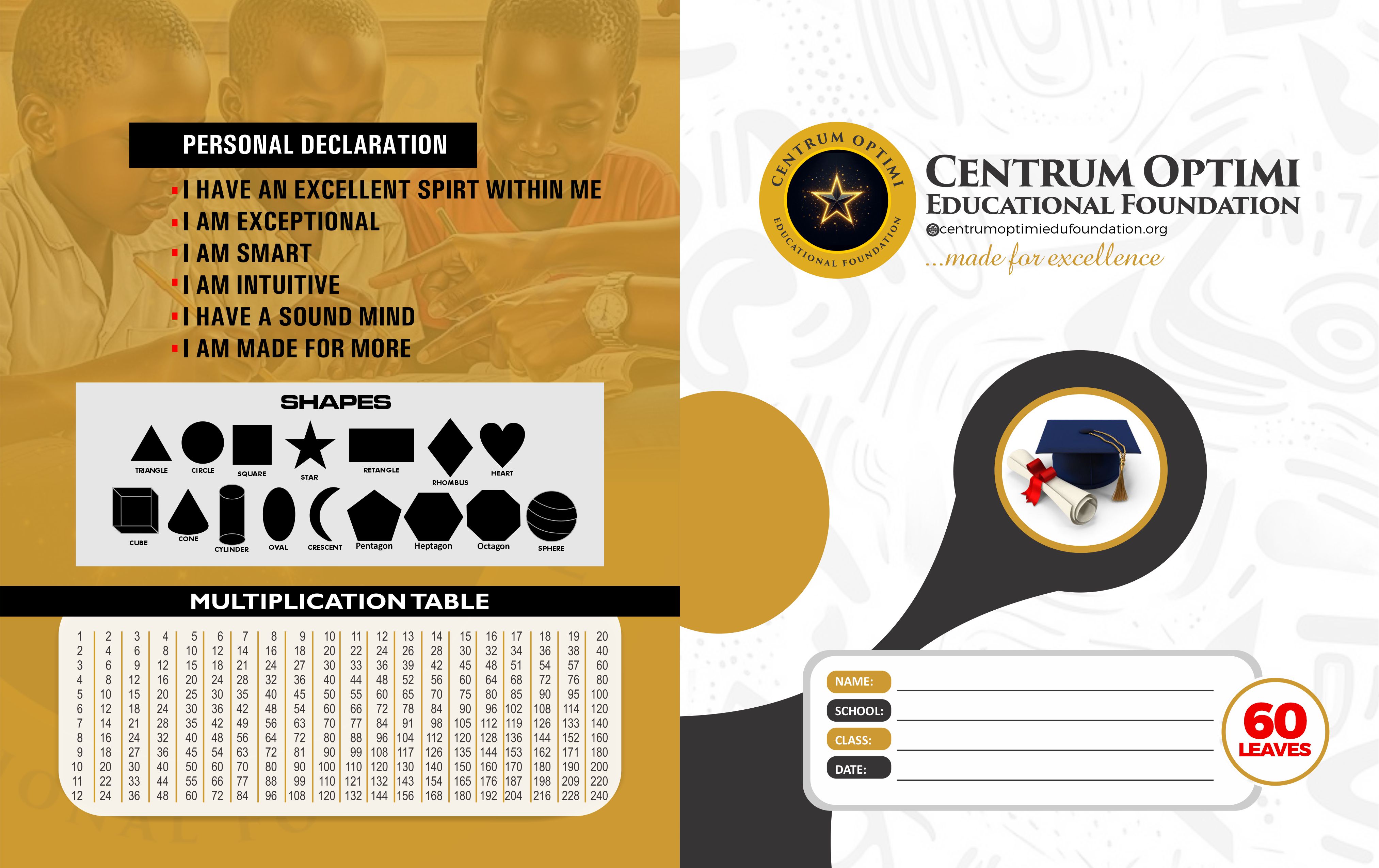
Many children, especially in the early stages, do not yet have a fixed sense of who they are. They borrow language from their environment. If that language is negative or limiting, it sticks. But if it is clear and affirming, it helps them build confidence from the inside out. This is why placing these personal declarations directly on our learning material is important. Beyond learning shapes and numbers, students are being reminded of their value, and over time, the repetition of these declarations becomes belief and forms the bedrock of their identity.
These are not just some vague motivational phrases. A student who believes they are smart is more likely to try. A student who believes they are made for more will not settle easily. A student who believes they are intuitive and have a sound mind can push back on negative self-talk and the "I can't do this" mindset. They also change how a student approaches learning itself, and shape how they see themselves before the school system and grade structures begin to define them.
In the end, these declarations are small lines with long-term effects. They do quiet and steady work, building identity, strengthening confidence, and setting a higher standard for how a child, and even an adult, sees themselves. They are seeds sown, helping individuals believe that there are possibilities beyond their immediate environment.